


Table of Contents
- What Is a Nose Thread Lift?
- Can a Nose Thread Lift Make Your Nose Look Higher?
- How Is a Nose Thread Lift Performed?
- Aptos vs PDO Nose Thread Lift: What's the Difference?
- How Long Does a Nose Thread Lift Last?
- Do Results Disappear When the Threads Dissolve?
- How Much Does a Nose Thread Lift Cost in Jakarta?
- Does a Nose Thread Lift Hurt?
- Nose Thread Lift Recovery and Aftercare
- What Should You Avoid After a Nose Thread Lift?
- What Are the Risks of a Nose Thread Lift?
- When Should You Seek Medical Attention?
- Nose Thread Lift vs Nose Filler: Which Is Better?
- Nose Thread Lift vs Surgical Rhinoplasty
- Who Is a Good Candidate for a Nose Thread Lift?
- Why Choose Ovela Clinic for Nose Thread Lift in Jakarta?
- Nose Thread Lift Before and After
- Frequently Asked Questions About Nose Thread Lift
- Conclusion: Is a Nose Thread Lift Worth It?
- Book a Nose Thread Lift Consultation at Ovela Clinic Jakarta
A nose thread lift, sometimes called a non-surgical nose lift, is a minimally invasive aesthetic procedure that uses specially designed medical threads to support and reshape certain soft tissues of the nose. It may be considered by patients who want a more defined nasal bridge or subtle improvement in nasal tip appearance without undergoing surgical rhinoplasty.
However, important questions remain: Can a nose thread lift really make your nose look higher? How long do the results last? What is the cost, and what are the potential risks?
At Ovela Clinic Jakarta, nose thread lifting is among the facial contouring options considered for appropriately selected patients. The choice of threads and treatment technique depends on individual anatomy, treatment goals, and medical assessment.
What Is a Nose Thread Lift?
A nose thread lift is a minimally invasive aesthetic procedure in which medical threads are placed beneath the skin to provide support and improve the appearance of the nasal contour. Unlike surgical rhinoplasty, which may involve modifying bone and cartilage, a nose thread lift primarily affects the soft tissues. Depending on the patient's anatomy and the technique used, the procedure may aim to:
- Improve the definition of the nasal bridge.
- Enhance the appearance of the nasal dorsum.
- Provide limited support to the nasal tip.
- Create a more balanced nasal profile.
However, a nose thread lift cannot replace all the structural changes achievable through surgical rhinoplasty. The degree of improvement is limited by the patient's anatomy, tissue characteristics, and the technique used.
Can a Nose Thread Lift Make Your Nose Look Higher?
A nose thread lift may make the nasal bridge appear more defined or elevated in selected patients. However, it does not create the same structural changes as rhinoplasty.
- Improving Nasal Bridge Definition
In suitable patients, thread placement may improve the appearance of the nasal bridge by providing support to the surrounding tissues. The improvement is generally related to contour and tissue support rather than major structural augmentation.
- Enhancing Nasal Tip Definition
Certain techniques may provide limited support to the nasal tip. However, the ability to lift or reshape the tip is restricted by the underlying anatomy and cannot be compared directly with surgical cartilage modification.
- Creating a More Balanced Facial Profile
Nose thread lifting may be considered as part of an overall facial contouring plan. Your doctor should assess the relationship between the nose, chin, lips, and other facial features before recommending treatment.
Important: Not every nose shape is suitable for thread lifting. Patients seeking major structural changes may require alternative procedures.
How Is a Nose Thread Lift Performed?
The procedure begins with a consultation and assessment of the nasal anatomy. Your doctor will evaluate:
- Nasal bridge shape and height.
- Nasal tip projection and position.
- Skin thickness and soft-tissue characteristics.
- Previous nose filler, thread lift, or rhinoplasty procedures.
- Skin condition and any signs of infection.
- Your expectations and desired results.
If nose thread lifting is considered appropriate, the doctor will explain the treatment options, expected limitations, recovery, and potential complications. The procedure is usually performed using local anesthesia to help minimize discomfort.
Threads are then placed according to the individualized treatment plan, using a technique that takes the nasal anatomy into consideration. After the procedure, patients receive specific aftercare instructions and follow-up recommendations.
Aptos vs PDO Nose Thread Lift: What's the Difference?
Aptos and PDO are commonly mentioned when discussing thread-lifting procedures. However, they do not describe exactly the same category.
Aptos is a brand and thread-lifting system offering various thread designs and materials.
Besides, PDO (Polydioxanone) or Polydioxanone, is a biodegradable medical thread material.
| Feature | Aptos Thread Lift | PDO Thread Lift |
|---|---|---|
| Technology | Thread-lifting brand and system | Thread material |
| Materials | Product-dependent; certain products contain PLLA/PCL | Primary functions |
| Thread designs | Vary according to the product | Include mono, cog, and other designs |
| Nose applications | Depend on the specific product and its intended use | Depend on thread design and suitability |
| Typical result | Influenced by anatomy, product, and technique | Influenced by anatomy, product, and technique |
| Longevity | Varies by product and patient | Varies by design and patient |
It would be inaccurate to claim that all Aptos products are superior to every PDO thread. For nasal procedures, the important consideration is whether the specific thread product is suitable for use in the nose, together with the patient's anatomy and the doctor's experience.
Related article: Aptos vs PDO Thread Lift: What's the Difference and Which Is Better?
How Long Does a Nose Thread Lift Last?
Nose thread lift results are temporary. There is no single duration that can be guaranteed for every thread product, technique, or patient. The longevity of results depends on several factors:
- The type and design of threads used.
- The number and configuration of threads.
- Nasal anatomy and tissue characteristics.
- Thread placement technique.
- Individual healing and tissue response.
- Previous nasal treatments or procedures.
Some contour improvements may be visible immediately after treatment, although initial swelling can affect the appearance. Over time, mechanical support may decrease and the surrounding tissues may change.
Do Results Disappear When the Threads Dissolve?
Not necessarily immediately. Tissue responses around the threads may contribute to changes in appearance after treatment. However, these changes do not guarantee that the initial nasal contour will be maintained once the threads have degraded.
Because nasal thread-lifting techniques and products vary considerably, a specific longevity estimate should be discussed in relation to the actual product used and the available clinical evidence.
How Much Does a Nose Thread Lift Cost in Jakarta?
The cost of a nose thread lift in Jakarta varies depending on the product, thread design, number of threads, procedural complexity, and individual treatment plan.
Factors affecting pricing include:
- The type of Aptos or PDO product selected.
- Whether the specific thread is suitable for nasal use.
- The degree of contour correction required.
- The number of threads needed.
- Previous nasal procedures and tissue condition.
At Ovela Clinic, the general price range for certain Aptos threads is IDR 1,500,000–2,200,000 per thread. However, this is a reference price for certain Aptos threads and should not be interpreted as the total price of a Nose Thread Lift procedure. The actual treatment cost must be confirmed based on the product and individualized treatment plan.
For current nose thread lift pricing, please contact Ovela Clinic directly.
[Ask About Nose Thread Lift Prices via WhatsApp]
Related article: Aptos Thread Lift Price in Jakarta: Costs and Treatment Options.
Does a Nose Thread Lift Hurt?
Nose thread lifting is generally performed under local anesthesia to help reduce discomfort. During the procedure, patients may still experience pressure, pulling sensations, or mild discomfort. After the anesthesia wears off, possible symptoms include:
- Mild to moderate tenderness.
- Swelling
- Bruising
- A feeling of tightness or pulling around the nose.
Mild symptoms generally improve gradually. However, severe pain, worsening swelling, or unusual skin discoloration requires prompt medical assessment.
Nose Thread Lift Recovery and Aftercare
Recovery varies between patients. During the first few days, swelling and tenderness may occur around the nasal bridge or tip. Some patients can resume light daily activities relatively quickly, although tissue healing and contour changes may continue over a longer period.
What Should You Avoid After a Nose Thread Lift?
During early recovery, your doctor may recommend:
- Avoiding strong pressure or massage on the nose.
- Not attempting to move or adjust the threads yourself.
- Protecting the nose from accidental impact.
- Temporarily avoiding strenuous exercise or activities that risk nasal trauma.
- Being cautious with glasses if they place pressure on the treated area.
- Postponing facial treatments until your doctor confirms they are appropriate.
- Attending scheduled follow-up appointments.
Specific aftercare recommendations depend on the technique used and individual recovery.
For more information, read Does a Thread Lift Hurt? Recovery, Downtime & Aftercare Guide.
What Are the Risks of a Nose Thread Lift?
Although a nose thread lift is minimally invasive, it is still a medical procedure with potential complications. The nose has complex anatomy, including important blood vessels and delicate soft tissues. Possible risks include the following.
- Swelling, Bruising, and Pain
Temporary swelling, bruising, and tenderness may occur following thread placement. Mild symptoms usually improve, but severe or worsening symptoms require medical evaluation.
- Asymmetry or Unsatisfactory Contour
The final appearance may be uneven or different from the patient's expectations. This can be influenced by pre-existing anatomy, tissue characteristics, and changes in tissue support after treatment.
- Palpable or Protruding Threads
In some cases, threads may become palpable, visible beneath the skin, or protrude through the skin surface. These findings require medical assessment and should not be managed at home.
- Infection
Infection is a possible complication of thread insertion. Symptoms may include increasing redness, pain, progressive swelling, fever, or discharge. Some infections may present later, particularly in patients with previous procedures or implanted materials.
- Skin and Tissue Complications
Thread placement may cause contour irregularities, skin tethering, or inflammatory tissue reactions. More serious tissue injury or impaired blood supply may also occur and requires urgent medical assessment.
- Limited or Shorter-Than-Expected Results
Not every patient achieves a significant improvement. Nose thread lifting cannot correct all structural nasal concerns, and the results may be less noticeable or shorter-lasting than expected. Appropriate patient selection and realistic expectations are therefore essential.
When Should You Seek Medical Attention?
Seek prompt medical evaluation if you experience:
- Severe or worsening pain.
- Pale, purple, or dark discoloration of the nasal skin.
- Spreading redness or increasing swelling.
- Fever or pus.
- Threads protruding through the skin.
- Sudden painful changes in nasal contour.
If sudden visual disturbances or neurological symptoms occur following a nasal procedure, seek emergency medical care.
Nose Thread Lift vs Nose Filler: Which Is Better?
Nose thread lifting and nose fillers work through different mechanisms. A nose thread lift uses medical threads to provide tissue support and modify the appearance of the nasal contour.
Nose fillers typically use injectable materials, such as hyaluronic acid, to add volume to selected areas.
| Feature | Nose Thread Lift | Nose Filler |
|---|---|---|
| Materials | Medical threads | Injectable filler |
| Primary Mechanism | Tissue support and contour modification | Volume augmentation |
| Typical result | Depend on thread design and anatomy | Depend on filler type, volume, and technique |
| Longevity | Temporary and variable | Temporary and variable |
| Risiko | Infection, thread extrusion, asymmetry, tissue injury | Including vascular occlusion, skin necrosis, and vision loss |
Neither procedure is automatically safer or better for every patient.
The nose is a high-risk anatomical region for injectable fillers because of its vascular connections, and filler-related vascular complications can be severe. Thread lifting also carries important risks, including infection and tissue injury. The appropriate option should be determined through medical consultation, considering the patient's anatomy, goals, treatment limitations, and risk profile.
Nose Thread Lift vs Surgical Rhinoplasty
Surgical rhinoplasty can provide more extensive structural changes to the nose, including modification of bone and cartilage when indicated. A nose thread lift, on the other hand, primarily aims to provide more limited soft-tissue contour changes.
Patients seeking major nasal reshaping, correction of structural abnormalities, or improvement in breathing function may be better suited for evaluation by a qualified plastic surgeon or other appropriate specialist.
Nose thread lifting should not be presented as a replacement for rhinoplasty in all patients.
Who Is a Good Candidate for a Nose Thread Lift?
Nose thread lifting may be considered for selected adult patients who:
- Want a subtle improvement in nasal contour.
- Have anatomy suitable for the available technique.
- Understand that results are temporary.
- Have realistic expectations.
- Do not have medical contraindications to the procedure.
Patients with active nasal infections, previous implant-related complications, unsuitable tissue characteristics, or significant structural concerns may require additional evaluation or an alternative approach. It is important to inform your doctor about any previous nose fillers, rhinoplasty, or thread-lifting procedures, as these can influence treatment planning and safety.
Why Choose Ovela Clinic for Nose Thread Lift in Jakarta?
Ovela Clinic focuses on Face Contouring & Skin Quality, with an approach that considers facial balance and individual anatomy.
Personalized Facial Assessment
Our doctors evaluate nasal anatomy, tissue characteristics, treatment history, and aesthetic goals before recommending a procedure.
Aptos and PDO Thread Lift Options
Ovela Clinic offers Aptos and PDO thread-lifting options for appropriately selected patients, including treatments involving the face and nose. The specific product and technique are selected according to the patient's needs and the product's suitability for the treatment area.
APTOS Silver Professional Recognition
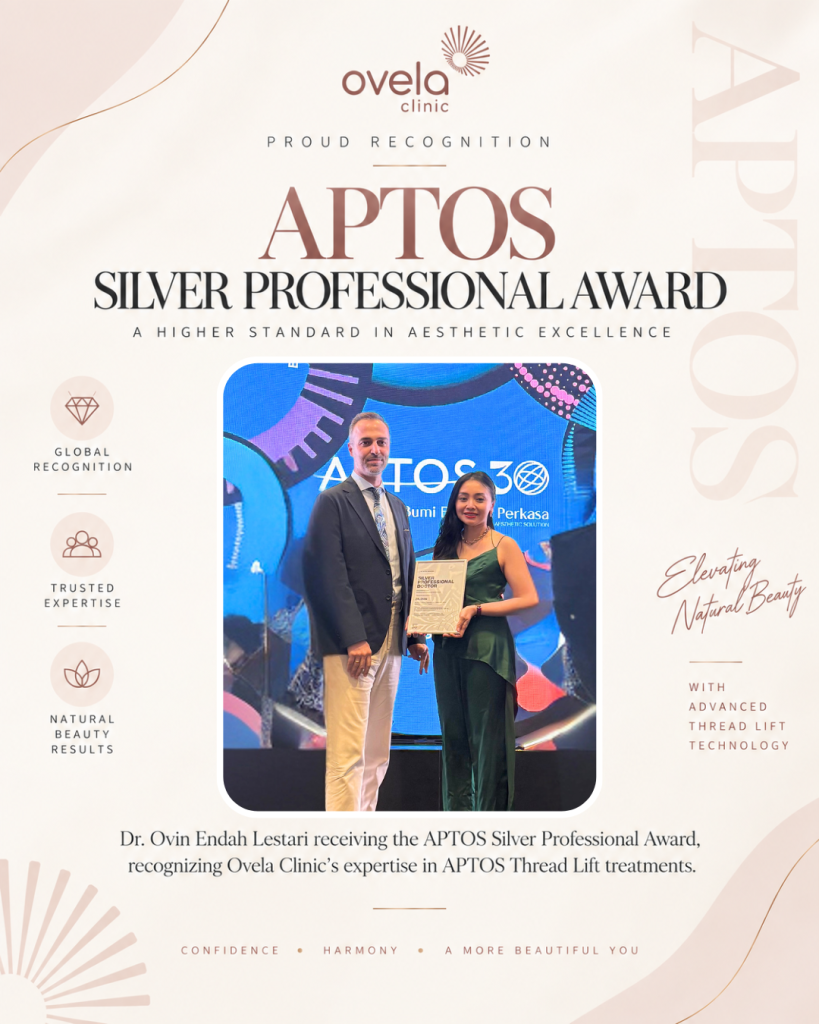
Dr. Ovin Endah Lestari has received APTOS Silver Professional.
Doctors with Aptos Training
Ovela Clinic doctors have completed relevant Aptos training, including Professional and Advanced training according to their individual certifications.
Focus on Natural-Looking Results
Our approach aims to improve facial proportions while preserving natural facial characteristics.
Nose Thread Lift Before and After
Nose thread lift results vary depending on the patient's original nasal anatomy, thread type, and treatment technique.
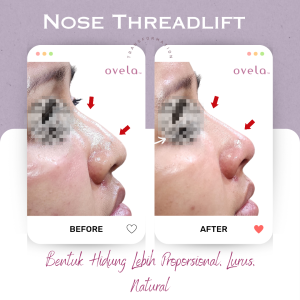
For an objective comparison, before-and-after photographs should use consistent angles, lighting, and facial expressions.
Individual results vary. Before-and-after photographs do not guarantee identical outcomes for other patients.
Frequently Asked Questions About Nose Thread Lift
- Can a nose thread lift make my nose look higher?
In selected patients, nose thread lifting may improve nasal bridge definition or provide limited nasal tip support. Results depend on the patient's anatomy and are generally more subtle than surgical changes.
- How long does a nose thread lift last?
Results are temporary. Longevity varies according to thread design, placement technique, and individual tissue characteristics.
- Is a nose thread lift painful?
The procedure is usually performed under local anesthesia. Patients may still experience pressure or pulling sensations during treatment and temporary tenderness afterward.
- How much does a nose thread lift cost in Jakarta?
Pricing depends on the product and treatment plan. Contact Ovela Clinic for current nose thread lift pricing and consultation details.
- What is the difference between Aptos and PDO for the nose?
Aptos is a thread-lifting brand and system with various products, while PDO is a type of medical thread material. Product suitability, anatomical considerations, and technique are more important than the name alone.
- Is a nose thread lift safer than nose filler?
Both procedures have different risks. Nose fillers can cause serious vascular complications, while nose thread lifting may lead to infection, thread extrusion, or tissue injury. Neither is risk-free.
- Can nose threads move or become visible?
Thread displacement, palpability, or protrusion can occur. Any unusual contour changes or discomfort should be assessed by your doctor.
- Can I have a nose thread lift after nose filler?
It may be considered in selected patients, but your doctor must assess previous filler placement, possible remaining material, tissue condition, and potential risks before recommending treatment.
Conclusion: Is a Nose Thread Lift Worth It?
A nose thread lift may be an option for patients seeking subtle nasal contour improvement without surgery. Potential benefits include improved nasal bridge definition or limited nasal tip support, but results are temporary and cannot replace the full range of structural corrections available through rhinoplasty.
Longevity, pricing, and recovery depend on the thread product, individual anatomy, and treatment technique. Because nasal anatomy is complex, careful medical assessment and realistic expectations are essential before proceeding.
Book a Nose Thread Lift Consultation at Ovela Clinic Jakarta
Wondering whether Aptos or PDO Nose Thread Lift is suitable for your nose shape?
Consult with an Ovela Clinic doctor to discuss your nasal anatomy, expected results, treatment options, recovery, pricing, and potential risks.
- Ovela Clinic Tebet – South Jakarta
Royal Palace Blok B-34
Jl. Prof. Dr. Soepomo SH No. 178A,Tebet, South Jakarta 12870 - Ovela Clinic Kebon Jeruk – West Jakarta
Jl. Panjang Arteri Kelapa Dua Raya No. 61 Blok J, Kebon Jeruk, West Jakarta 11550
Ovela Clinic — Face Contouring & Skin Quality Expert
This article is intended for educational purposes and does not replace an individual medical examination or consultation.