

Table of Contents
- Does a Thread Lift Hurt?
- How Long Does Thread Lift Recovery Take? .
- 8 Things to Avoid After a Thread Lift
- Is Swelling Normal After a Thread Lift?
- Is Tightness or a Pulling Sensation Normal After Thread Lift?
- What If I Develop Skin Dimpling After a Thread Lift?
- Warning Signs After a Thread Lift: When to Contact Your Doctor
- Is Aptos Thread Lift Recovery Different from PDO Thread Lift Recovery?
- When Will I See My Final Thread Lift Results?
- Why Choose Ovela Clinic for Aptos and PDO Thread Lift in Jakarta?
- Frequently Asked Questions About Thread Lift Recovery
- Conclusion: Thread Lift Recovery and Aftercare
- Book an Aptos or PDO Thread Lift Consultation in Jakarta
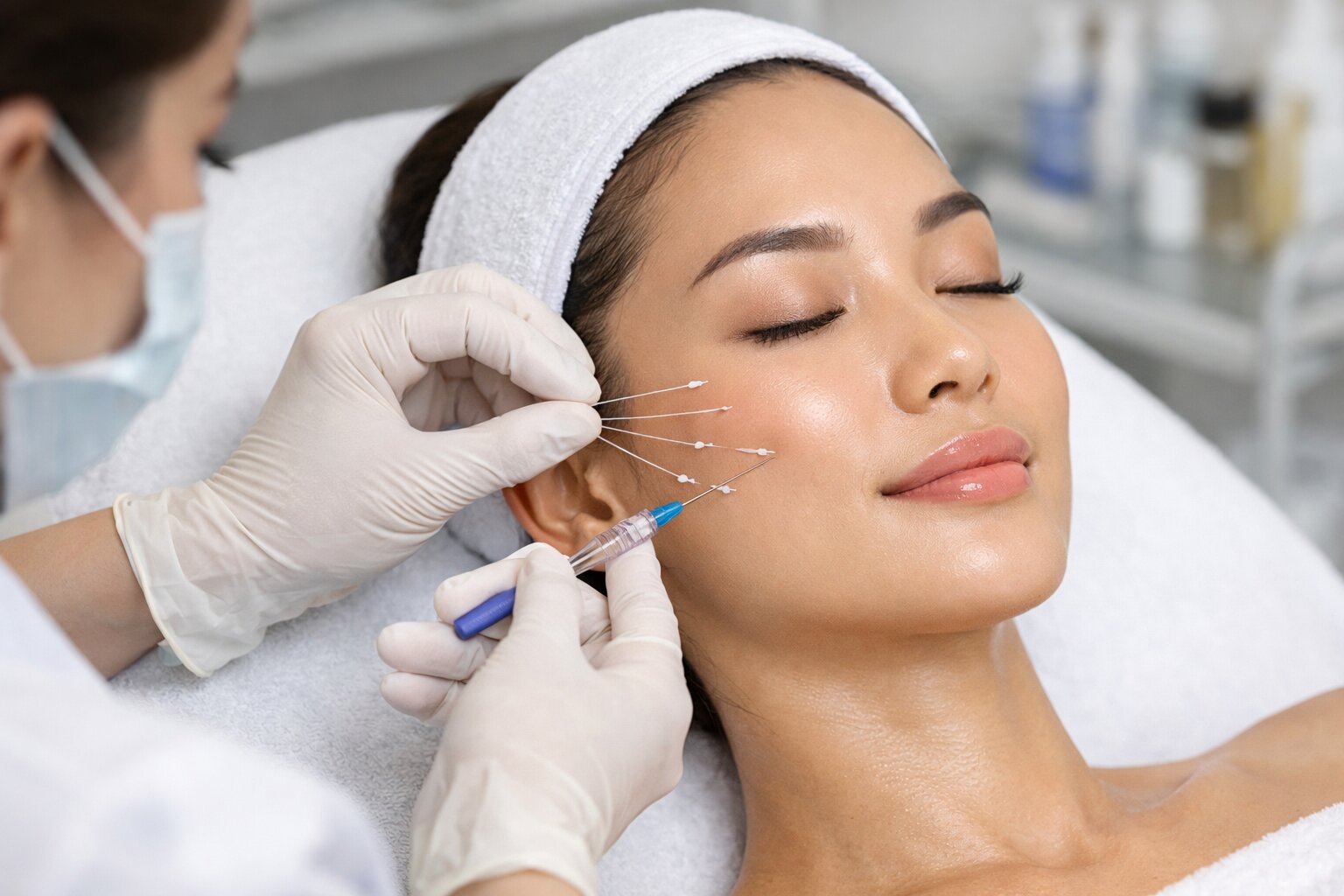
Does a thread lift hurt? How long does thread lift recovery take, and what should you avoid after treatment? These are common questions among patients considering a non-surgical facial lifting procedure to improve sagging cheeks, jowls, or jawline definition. A thread lift is a minimally invasive aesthetic procedure that uses medical threads to lift, support, or reposition facial tissues.
Although it does not involve surgical facelift incisions, thread lifting still requires the placement of threads beneath the skin. Temporary swelling, bruising, tenderness, and a pulling sensation may occur during recovery.
Thread lift recovery generally progresses over several days to a few weeks, depending on the thread type, placement technique, treatment area, and individual healing response.
At Ovela Clinic Jakarta, we offer Aptos and PDO Thread Lift treatments with a personalized facial contouring approach. Patients receive aftercare instructions tailored to their procedure.
Does a Thread Lift Hurt?
Thread lifting can cause discomfort, but the procedure is usually performed under local anesthesia to help minimize pain. Before treatment, your doctor will assess the facial areas involved and determine the appropriate anesthesia technique.
Is Thread Insertion Painful?
During the procedure, you may experience:
- Pressure beneath the skin.
- A pulling sensation as the threads are positioned
- Mild discomfort in certain areas.
- A feeling of tissue movement during lifting.
Local anesthesia reduces pain, although it may not completely eliminate pressure or pulling sensations.
Does a Thread Lift Hurt After the Anesthesia Wears Off?
Once the anesthetic effect decreases, patients may experience mild to moderate soreness, tenderness, or tightness. These symptoms generally improve gradually during recovery.
However, severe pain, worsening pain, or pain accompanied by unusual skin discoloration should not be considered normal recovery and requires prompt medical assessment.
How Long Does Thread Lift Recovery Take? .
There is no single recovery timeline that applies to every patient. Some patients can resume light daily activities relatively quickly, although swelling, bruising, or tightness may persist longer.
Thread Lift Recovery Timeline
| Time After Treatment | What You May Experience |
|---|---|
| First 24 hours | Tenderness, tightness, initial swelling, or mild bruising |
| Days 2–3 | Swelling and bruising may remain visible or become more noticeable |
| Days 4–7 | Symptoms often begin to improve gradually |
| Week 2 | Many mild symptoms continue to settle, although some tightness may remain |
| Weeks 3–4 | Facial contours and tissue sensations may continue to adjust |
This is a general guide, not a guaranteed recovery schedule. Healing after Aptos or PDO Thread Lift varies according to the specific product, number of threads, placement technique, and patient characteristics.
When Can I Return to Work After a Thread Lift?
Some patients can return to desk work or other light activities within approximately 1–3 days, depending on their comfort and recovery. However, patients whose jobs involve strenuous physical activity, significant facial movement, or pressure on the treated areas may need additional recovery time.
If you are planning treatment before an important event, allow sufficient time for potential bruising or swelling, as these effects cannot always be predicted.
8 Things to Avoid After a Thread Lift
Proper thread lift aftercare is important for supporting tissue healing and reducing the risk of complications.
The following recommendations are commonly discussed after thread-lifting procedures. Always follow the specific instructions provided by your treating doctor.
- Avoid Facial Massage and Excessive Pressure
During early recovery, avoid strong facial massage, gua sha, or direct pressure over the thread placement areas. Excessive manipulation may cause discomfort or interfere with healing tissues.Do not attempt to massage or correct facial irregularities yourself without medical guidance.
- Avoid Sleeping Directly on the Treated Areas
During the first few days, patients are often advised to sleep on their backs to reduce pressure on the treated areas.Keeping the head slightly elevated may also improve comfort when swelling is present.Can I sleep on my side after a thread lift? It is generally advisable to avoid direct pressure on the treated side of the face during early healing.The appropriate time to resume side sleeping depends on the thread placement, treatment technique, and your doctor's recommendations.
- Avoid Strenuous Exercise Temporarily
High-intensity workouts, heavy lifting, and activities that create excessive pressure or movement around the face may need to be postponed.Light activities, such as gentle walking, may be resumed according to comfort and medical advice.The timing for returning to exercise should be based on your recovery rather than a fixed number of days alone.
- Limit Excessive Facial Movements During Early Recovery
After a thread lift, your doctor may recommend temporarily limiting activities that create significant stretching or pressure on the treated tissues.Examples:
- Opening the mouth excessively wide.
- Chewing particularly hard foods.
- Exaggerated facial movements that cause pulling discomfort.
- Activities that place pressure on the cheeks or jawline.
Normal, comfortable facial movements can generally continue according to your doctor's guidance. - Postpone Facial Treatments and Massage
Avoid strong facial massage or other procedures that apply significant pressure to the treated areas until your doctor confirms that healing is sufficient.Energy-based treatments such as RF, HIFU, or Ultherapy should also be discussed with your treating doctor before being performed over recently treated areas. The appropriate interval depends on the thread type, placement depth, treatment area, and recovery.
- Avoid Excessive Heat During Early Healing
Saunas, steam rooms, and activities involving excessive heat may need to be postponed during the initial recovery period. This precaution may help minimize discomfort and avoid worsening swelling. Follow your doctor's specific recommendations.
- Do Not Pull or Manipulate the Threads
If you notice a palpable thread, skin indentation, or a thread appearing to protrude, do not attempt to push, pull, cut, or adjust it yourself.These findings should be evaluated by your treating doctor to determine whether observation or medical intervention is needed.
- Do Not Skip Follow-Up Appointments
Follow-up visits allow your doctor to monitor healing, tissue positioning, and possible complications. Even if symptoms appear mild, attend your scheduled review appointments.
Is Swelling Normal After a Thread Lift?
Mild to moderate swelling can occur after a thread lift, particularly during the first few days. Swelling is one of the body's responses to tissue manipulation and thread placement.
Some patients may also develop bruising around the entry points or along the treated areas.
How Can I Reduce Swelling After a Thread Lift?
Helpful measures may include:
- Following your doctor's aftercare instructions.
- Avoiding excessive facial pressure.
- Resting in a comfortable position.
- Taking prescribed medication as directed.
- Avoiding activities that increase discomfort or swelling.
Cold compresses may be recommended in selected cases, but they should be used according to your doctor's instructions and without applying significant pressure directly over the threads.
When Should Swelling Be a Concern?
Contact your doctor promptly if swelling:
- Becomes progressively worse after initially improving.
- Is accompanied by spreading redness.
- Is associated with significant pain or warmth.
- Occurs together with fever.
- Is accompanied by discharge or pus.
These symptoms may require evaluation for infection or other complications.
Is Tightness or a Pulling Sensation Normal After Thread Lift?
Yes. A pulling, tight, or mildly stiff sensation may occur following thread lifting. This may relate to mechanical tissue support, swelling, and tissue adaptation during healing.
The sensation often improves gradually. However, severe tightness, increasing pain, or worsening facial asymmetry should be medically assessed.
What If I Develop Skin Dimpling After a Thread Lift?
Dimpling refers to a visible indentation or pulling of the skin surface. Mild dimpling can occur after thread placement and may improve as tissues adjust.
However, not all cases resolve without intervention. Management depends on the cause, severity, location, and timing of the dimpling.
Do not attempt to massage or release the threads yourself. Your doctor should determine whether observation or corrective treatment is appropriate.
Warning Signs After a Thread Lift: When to Contact Your Doctor
Although many post-treatment symptoms are temporary, certain findings require prompt medical attention. Warning signs include:
- Severe or worsening pain.
- Spreading redness or increasing warmth.
- Progressively worsening swelling.
- Fever or pus.
- Threads protruding through the skin.
- Unusual skin discoloration, including pale, purple, or dark areas.
- Sudden or worsening facial asymmetry.
Severe pain or skin changes suggesting impaired blood supply require urgent medical evaluation. Infections, protruding threads, and suspected tissue complications should not be managed at home without medical supervision.
Is Aptos Thread Lift Recovery Different from PDO Thread Lift Recovery?
Both Aptos and PDO Thread Lift may cause swelling, bruising, tenderness, and a pulling sensation after treatment. However, recovery time cannot be predicted solely from the names Aptos or PDO. Differences in recovery are influenced by:
- Thread design and characteristics.
- Number of threads inserted.
- Treatment area and placement depth.
- Extent of tissue repositioning.
- Placement technique.Individual healing response.
- The patient's condition and recovery response
Therefore, it would be inaccurate to assume that every Aptos treatment requires longer recovery or that every PDO treatment has less downtime.
For a detailed comparison, read Aptos vs PDO Thread Lift: What's the Difference and Which Is Better?.
When Will I See My Final Thread Lift Results?
Some mechanical lifting effects may be visible immediately after treatment. However, swelling and healing can affect the initial facial appearance. As swelling subsides, facial contours may appear more settled, although tissue changes can continue over the following weeks. The final appearance and longevity of results vary between patients.
Related article: How Long Does a Thread Lift Last? Aptos vs PDO Thread Lift Results.
Why Choose Ovela Clinic for Aptos and PDO Thread Lift in Jakarta?
Ovela Clinic offers Aptos and PDO Thread Lift treatments using a personalized facial contouring approach. Our doctors assess facial anatomy, tissue condition, degree of laxity, and individual treatment goals before recommending the appropriate thread type and technique.
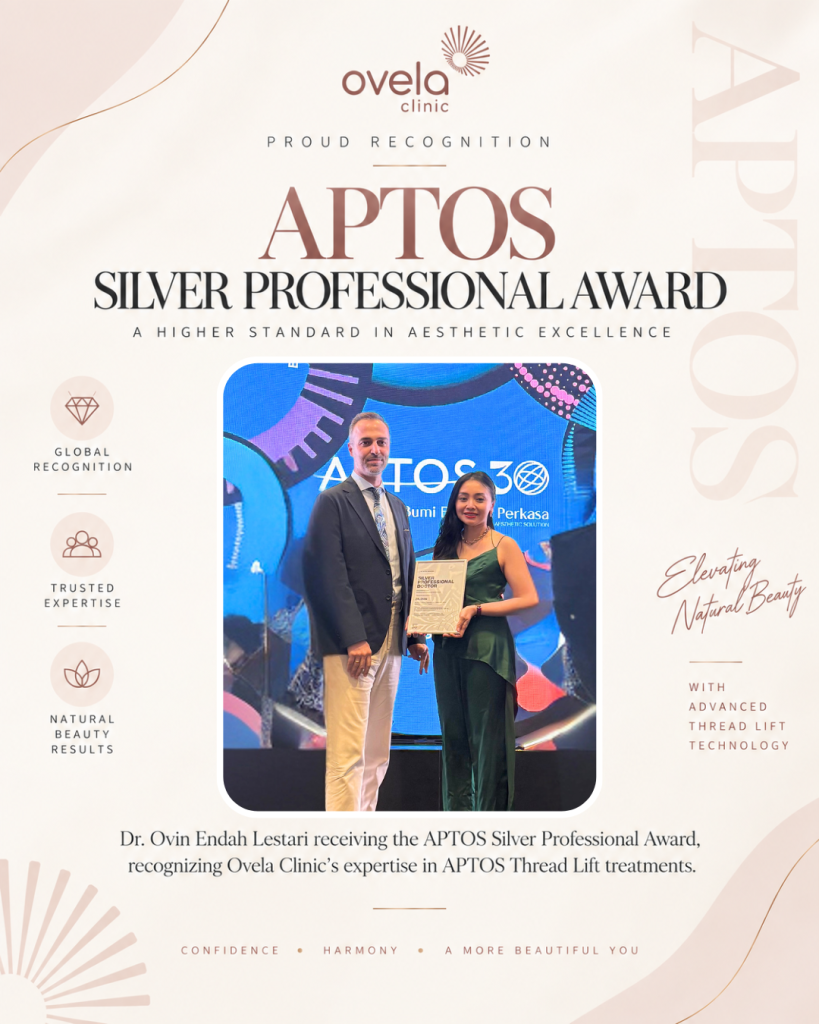
- APTOS Silver Professional Recognition
Dr. Ovin Endah Lestari has received the APTOS Silver Professional recognition for her professional involvement and experience with Aptos thread-lifting technology.
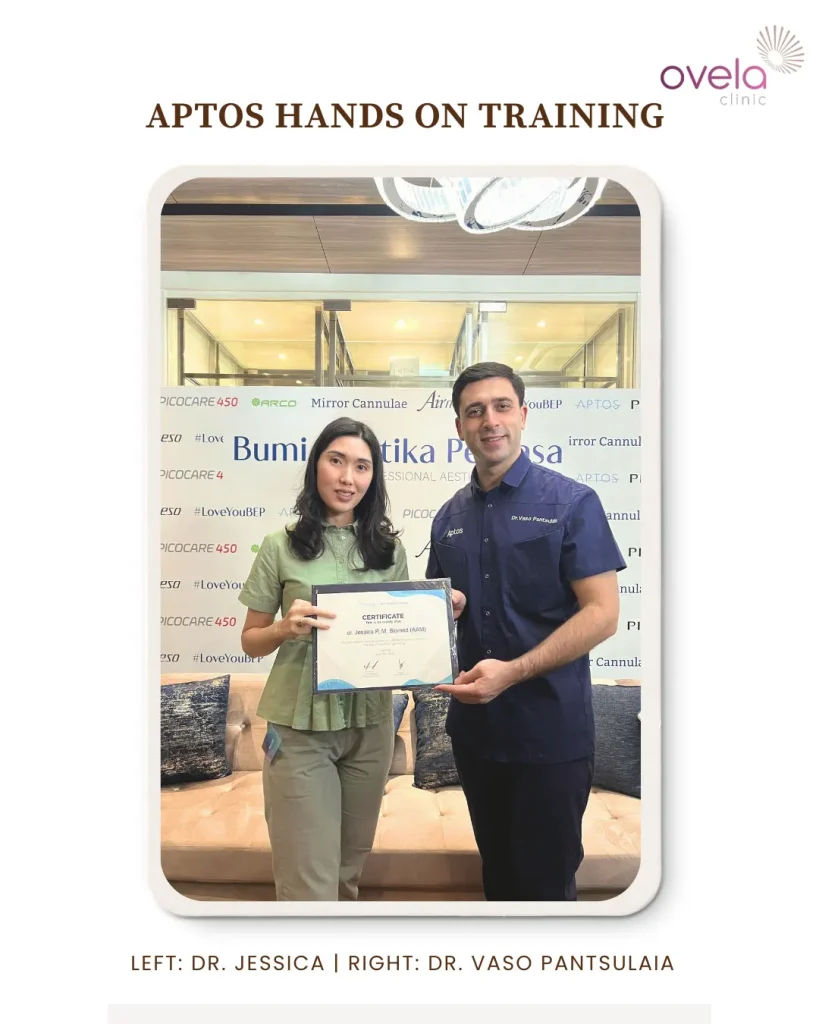
- Doctors with Aptos Training
Ovela Clinic doctors have received relevant Aptos training, including Professional and Advanced training according to their individual certifications.
- Aptos and PDO Treatment Options
Ovela Clinic offers thread-lifting options for the face and nose in patients with suitable clinical indications.
- Natural-Looking Facial Contouring
Our approach focuses on improving facial contours proportionately while preserving natural facial characteristics and expressions.
For more information about the procedure, visit Face and Nose Thread Lift in Jakarta – Aptos & PDO treatment page..
Thread Lift Before and After at Ovela Clinic
Explore examples of Aptos Thread Lift results from Ovela Clinic patients.
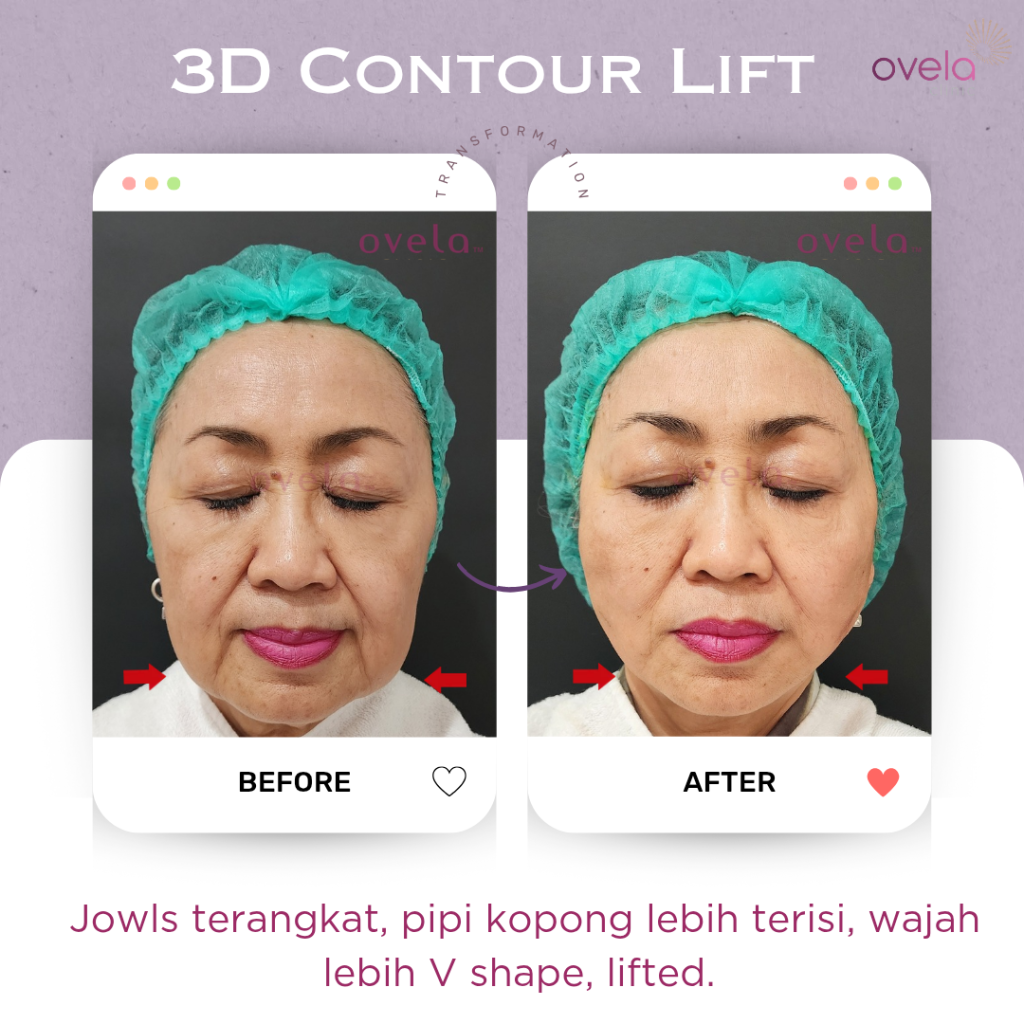
Results vary between patients. Before-and-after photographs demonstrate individual outcomes and do not guarantee the same results for everyone.
Frequently Asked Questions About Thread Lift Recovery
- Does a thread lift hurt?
Thread lifting is usually performed under local anesthesia to reduce pain. Patients may still feel pressure or pulling during the procedure, followed by tenderness after the anesthetic wears off.
- How long does swelling last after a thread lift?
Swelling is common during the first few days and generally improves gradually. Mild residual swelling may persist longer in some patients.
- When can I sleep on my side after a thread lift?
Avoid direct pressure on the treated areas during early recovery. Your doctor can advise when side sleeping is appropriate based on the placement technique and healing progress.
- When can I exercise after a thread lift?
Light activities may be resumed earlier, while strenuous exercise often needs to be postponed temporarily. Follow your doctor's recommendations.
- Can I have a facial after a thread lift?
Facials involving massage or significant pressure should be postponed until your doctor confirms that the treated tissues have healed sufficiently.
- Can I eat hard foods after a cheek thread lift?
Your doctor may recommend temporarily avoiding foods that require forceful chewing or excessive mouth opening during early recovery.
- Is skin dimpling normal after a thread lift?
Mild dimpling can occur and may improve as tissues adjust. Persistent, severe, or worsening dimpling should be assessed by your doctor.
- When should I contact my doctor after a thread lift?
Contact your doctor promptly if you experience worsening pain, spreading redness, fever, pus, protruding threads, or unusual skin discoloration.
Conclusion: Thread Lift Recovery and Aftercare
Thread lift recovery generally progresses over several days to a few weeks. Temporary swelling, bruising, tenderness, and tightness may occur, but these symptoms should generally improve over time.
Important aftercare precautions include avoiding excessive facial pressure or massage, limiting activities that place tension on the treated tissues, postponing certain facial treatments, and following your doctor's review schedule.
Most importantly, patients should understand the difference between expected recovery symptoms and warning signs that require medical evaluation.
Book an Aptos or PDO Thread Lift Consultation in Jakarta
Interested in learning whether Aptos or PDO Thread Lift is suitable for sagging cheeks, jowls, or jawline definition? Our doctors at Ovela Clinic can assess your facial condition and explain the procedure, expected recovery, and individualized treatment options.
- Ovela Clinic Tebet – South Jakarta
Royal Palace Blok B-34Jl. Prof. Dr. Soepomo SH No. 178A,Tebet, South Jakarta 12870
- Ovela Clinic Kebon Jeruk – West Jakarta
Jl. Panjang Arteri Kelapa Dua Raya No. 61 Blok J, Kebon Jeruk, West Jakarta 11550
Ovela Clinic — Face Contouring & Skin Quality Expert
This article is intended for educational purposes and does not replace an individual medical examination or consultation.