


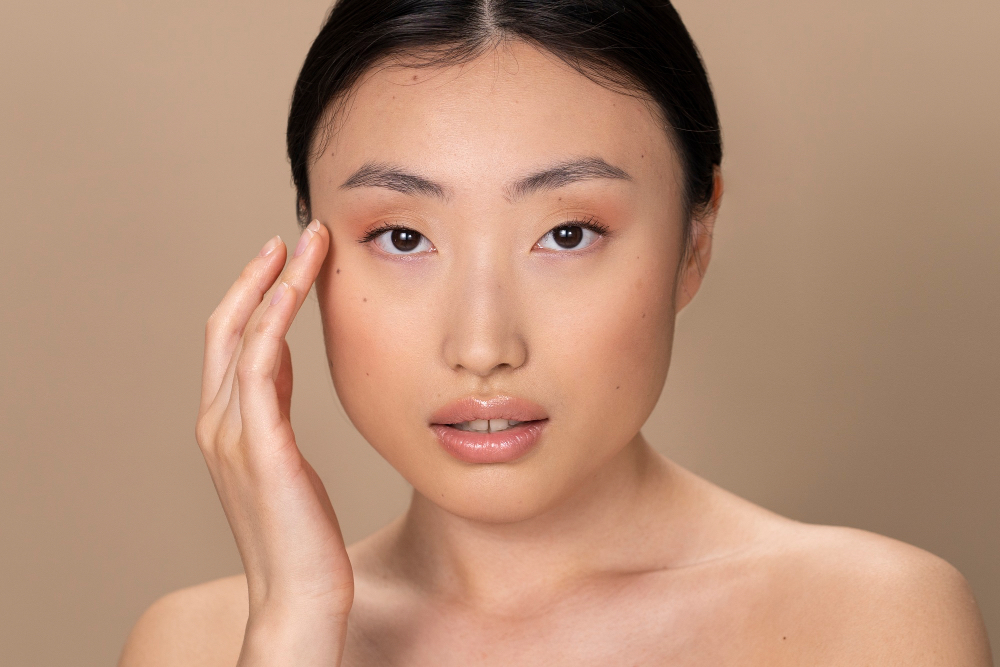
- What Is Double Eyelid Stitching? Procedure, Benefits & How It Works
- What Is Double Eyelid Stitching?
- What Is the Difference Between a Monolid and a Double Eyelid?
- How Does Double Eyelid Stitching Work?
- Who May Be Suitable for Double Eyelid Stitching?
- Who May Not Be Suitable?
- How Is Double Eyelid Stitching Performed?
- Is Double Eyelid Stitching Painful?
- What Are the Benefits of Double Eyelid Stitching?
- Is Double Eyelid Stitching the Same as Double Eyelid Surgery?
- Is Double Eyelid Stitching Safe?
- What Is Recovery Like After Double Eyelid Stitching?
- Aftercare Following Double Eyelid Stitching
- How Long Does a Non-Incisional Double Eyelid Last?
- Can Double Eyelid Stitching Be Repeated?
- When Should You Contact Your Doctor After the Procedure?
- Double Eyelid Stitching at Ovela Clinic Jakarta
- FAQ About Double Eyelid Stitching
- Double Eyelid Stitching Consultation in Jakarta
- Medical Review
- Double Eyelid Before and After
What Is Double Eyelid Stitching? Procedure, Benefits & How It Works
Double eyelid stitching is a non-incisional procedure that creates an upper eyelid crease using medical sutures, without the long incision used in incisional double eyelid surgery.
The procedure is also known as a double eyelid suture technique or non-incisional double eyelid procedure.
It may be considered by people with monolids, a poorly defined eyelid crease, or uneven eyelid folds, particularly those who want to create a double eyelid without an incisional procedure.
However, double eyelid stitching is not suitable for every eyelid.
Skin thickness, the amount of eyelid tissue, existing eyelid crease, right-to-left symmetry, and the desired crease design should all be assessed before deciding whether a non-incisional technique is appropriate.
--> Learn more aboutDouble Eyelid Stitching in Jakarta – Ovela Clinic
What Is Double Eyelid Stitching?
Double eyelid stitching is a technique that uses medical sutures to create an upper eyelid crease without making a long surgical incision.
In a natural double eyelid, there is a relationship between the eyelid skin and deeper structures that allows a visible crease to form when the eyes open.
With a non-incisional double eyelid technique, sutures are used to help create fixation within the eyelid tissues so that a crease forms when the eye opens.
This differs from incisional double eyelid surgery, where an incision provides greater access to the eyelid tissues and allows more extensive tissue modification.
What Is the Difference Between a Monolid and a Double Eyelid?
Monolid is an upper eyelid without a clearly visible supratarsal crease when the eye is open.
A double eyelid has a visible crease or fold in the upper eyelid.
Both are normal anatomical variations.
Double eyelid stitching is therefore not performed because a monolid is a medical problem. It is an aesthetic procedure for people who would like to create or better define an upper eyelid crease.
The crease should ideally be designed according to the natural eye shape, eyelid anatomy and facial proportions rather than following the same design for every patient.
How Does Double Eyelid Stitching Work?
Double eyelid stitching is more than simply placing a visible line of stitches along the eyelid.
In a non-incisional technique, medical sutures are positioned at specific points within the eyelid to help create fixation between the relevant tissues.
This fixation allows the eyelid skin to fold inward and form a double eyelid crease when the eyes are open.
The exact fixation technique may vary.
The result therefore depends on more than the type of suture used. Important factors include:
- Eyelid anatomy
- Skin and tissue thickness
- Amount of eyelid tissue
- Existing eyelid crease
- Crease height and design
- Fixation technique and position
- Individual healing response
This is why double eyelid design should not follow a one-size-fits-all approach.
Who May Be Suitable for Double Eyelid Stitching?
Double eyelid stitching may be considered for people who:
- Do you have monolid dan ingin membentuk double eyelid
- Have a poorly defined eyelid crease
- Have different crease patterns on the right and left eyelids
- Want a more defined upper eyelid crease
- Prefer a double eyelid procedure without a long incision
- Prefer a non-incisional approach with generally lighter recovery than an incisional procedure
However, having monolids does not automatically make someone an ideal candidate.
Eyelid skin, tissue thickness, anatomy and treatment goals should still be assessed.
Read more: [5 Signs You May Be Suitable for Double Eyelid Stitching]
Who May Not Be Suitable?
A non-incisional technique has limitations and is not necessarily the best option for every eyelid.
Certain anatomical characteristics can make it more difficult to achieve an optimal result using suture fixation alone.
The doctor may need to assess:
- Eyelid thickness
- Jumlah dan distribusi jaringan
- Excess or loose eyelid skin
- Excess or loose eyelid skin
- Eye shape
- Degree of asymmetry
- Overall eyelid condition
When significant excess tissue or other anatomical factors cannot be adequately addressed with sutures alone, another approach may be more appropriate.
The decision between double eyelid stitching and incisional double eyelid surgery should therefore be based on eyelid anatomy and treatment goals rather than simply a preference to avoid surgery.
How Is Double Eyelid Stitching Performed?
The exact technique may vary according to the patient's eyelid anatomy, but the procedure generally involves the following steps.
1. Consultation and Eyelid Assessment
The doctor assesses the eye shape, eyelid thickness, existing crease, amount of eyelid tissue, right-to-left symmetry and desired result.
This assessment also helps determine whether a non-incisional technique is appropriate.
2. Designing the Eyelid Crease
The proposed position and shape of the crease are planned according to the eye anatomy and patient's preferences.
The goal is not simply to create a high crease.
A well-planned crease should complement the natural structure of the eyes and face.
3. Antiseptic Preparation and Local Anaesthesia
The eyelid area is cleaned with an antiseptic solution and local anaesthesia is administered to help reduce discomfort during the procedure.
4. Creating the Double Eyelid Crease
Medical sutures are placed using a fixation technique designed to create the tissue relationship required for the eyelid crease.
5. Post-Procedure Assessment
The position and appearance of the crease are evaluated after the procedure. Early swelling can make the crease appear temporarily higher or deeper than it will after recovery.
Procedure time may vary depending on the technique and individual eyelid anatomy.
Is Double Eyelid Stitching Painful?
Local anaesthesia is used during double eyelid stitching to help reduce discomfort during the procedure.
Individual sensations and pain tolerance vary. Once the anaesthetic wears off, some patients may experience temporary tenderness, tightness or discomfort around the eyelids during the early recovery period.
For this reason, it is more accurate to describe the procedure as being performed with local anaesthesia for comfort rather than promising that it is completely painless.
What Are the Benefits of Double Eyelid Stitching?
For appropriately selected patients, double eyelid stitching may provide several aesthetic benefits.
Creates a Double Eyelid Crease
The procedure can create an eyelid crease in patients with monolids or a poorly defined existing fold.
Creates a More Defined Upper Eyelid
A visible crease can make the upper eyelid contour appear more defined.
May Improve the Balance Between the Two Eyelids
In selected cases, the crease design can be adjusted to help improve the balance between the right and left eyelids.
However, natural facial asymmetry cannot always be completely eliminated.
Can Make the Eye Area Appear More Open
Creating an eyelid crease can give the eye area a more open and defined appearance without necessarily creating a dramatic change.
May Make Eye Makeup Easier to Apply
A more defined eyelid crease may make eyeliner or eyeshadow application easier for some patients.
No Long Surgical Incision
The non-incisional technique uses suture fixation without the long incision required for incisional double eyelid surgery.
Is Double Eyelid Stitching the Same as Double Eyelid Surgery?
No. Both procedures can create or improve an upper eyelid crease, but they use different approaches.
| Non-Incisional Double Eyelid | Incisional Double Eyelid Surgery |
|---|---|
| Non-incisional technique | Uses a surgical incision |
| Uses suture fixation | Allows more extensive tissue modification |
| No long eyelid incision | Requires an incision |
| Generally lighter recovery | Recovery is generally longer |
| Crease may weaken or disappear over time | Fixation is generally more stable |
| Suitable for selected eyelid anatomy | Can address more complex tissue conditions |
This does not mean that one technique is always better.
The appropriate approach depends on eyelid anatomy, tissue characteristics and individual treatment goals.
Read more: [Double Eyelid Stitches vs Eyelid Surgery: Which One is Right for You?]
Is Double Eyelid Stitching Safe?
As with any medical procedure, double eyelid stitching can have side effects and potential complications.
Temporary effects after the procedure may include:
- Swelling
- Bruising
- Discomfort
- Temporary asymmetry during early recovery
Other complications are possible, although they do not occur in every patient.
Because the procedure involves the eyelid close to the eye, it should be performed by a doctor familiar with eyelid anatomy using appropriate technique and sterile medical standards.
A consultation before treatment is also important to determine whether the eyelid anatomy is suitable for a non-incisional technique.
What Is Recovery Like After Double Eyelid Stitching?
Swelling and bruising can occur following the procedure.
During early recovery, the crease may appear:
- Higher
- Deeper
- More defined
- Slightly different between the right and left sides
The appearance during the first few days does not necessarily represent the final result.
As swelling decreases and the tissues adapt, the appearance of the crease generally changes and becomes more natural.
Recovery time varies between individuals.
Aftercare Following Double Eyelid Stitching
Aftercare instructions may vary depending on the technique used and the individual patient's condition.
General advice may include:
- Keep the treatment area clean according to your doctor's instructions
- Avoid rubbing or placing excessive pressure on the eyelids
- Use cold compresses if advised
- Take prescribed medication according to instructions
- Avoid applying unapproved products to the treatment area
- Follow your doctor's recommendations regarding eye makeup and contact lenses
- Attend follow-up appointments when recommended
Always follow the specific aftercare instructions provided by the doctor who performed your procedure.
How Long Does a Non-Incisional Double Eyelid Last?
There is no single duration that applies to every patient.
For some patients, the double eyelid crease can remain visible for many years. In others, it may gradually become less defined or disappear sooner.
The longevity of the result can be influenced by:
- Eyelid anatomy
- Skin and tissue thickness
- Amount of eyelid tissue
- Crease design
- Fixation technique
- Healing response
- Changes in the eyelid tissues over time
For this reason, double eyelid stitching should not be described as guaranteed to be permanent or guaranteed to last for a specific number of years.
Read our detailed guide: [How Long Does Double Eyelid Stitching Last? Is It Permanent?]
Can Double Eyelid Stitching Be Repeated?
In selected cases, repeat treatment or revision may be considered if the eyelid crease becomes less defined or changes over time.
However, the eyelid should first be reassessed.
The doctor may need to evaluate the current crease, tissue condition, previous treatment, degree of asymmetry and whether the anatomy remains suitable for a non-incisional technique.
A fading crease does not automatically mean that repeating exactly the same procedure is the most appropriate option.
When Should You Contact Your Doctor After the Procedure?
Follow the recovery instructions provided by your doctor.
Contact your doctor or clinic if you develop symptoms outside the expected recovery process, particularly:
- Increasing or severe pain
- Significantly worsening swelling
- Spreading redness
- Discharge or signs of infection
- Changes in vision
- Any other unexpected symptom that causes concern
Symptoms involving the eye area should not be self-diagnosed.
Double Eyelid Stitching at Ovela Clinic Jakarta
At Ovela Clinic Jakarta, double eyelid stitching is performed after an assessment of the eyelid anatomy to determine whether the patient is suitable for a non-incisional technique.
The assessment may include:
- Eye shape
- Eyelid thickness
- Amount of skin and tissue
- Existing eyelid crease
- Right-to-left eyelid symmetry
- Desired crease design
The aim is not simply to create the highest possible crease, but to plan a double eyelid that is proportionate to the patient's natural eye and facial anatomy.
Ovela Clinic has provided medical aesthetic treatments in Jakarta since 2012, with locations in Tebet, South Jakarta, and Kebon Jeruk, West Jakarta.
For information about the treatment, suitability, before-and-after results and consultation:
→ [Double Eyelid Stitching in Jakarta – Ovela Clinic]
FAQ About Double Eyelid Stitching
Double eyelid stitching is a non-incisional technique that uses medical sutures to create an upper eyelid crease without the long incision used in incisional double eyelid surgery.
Double eyelid stitching uses a non-incisional suture fixation technique. It differs from incisional double eyelid surgery, which uses a surgical incision to provide greater access to and modification of the eyelid tissues.
Monolids are one of the common reasons people consider double eyelid stitching. However, eyelid thickness and anatomy should still be assessed to determine whether a non-incisional technique is appropriate.
Local anaesthesia is used to help reduce discomfort during the procedure. Sensation and pain tolerance vary between patients.
Not necessarily. The crease may remain visible for many years in some patients but may weaken or disappear sooner in others. Longevity depends on factors such as eyelid anatomy, tissue characteristics, fixation technique and changes over time.
The procedure may help improve the balance of the eyelid creases in selected cases. However, natural asymmetry exists between the right and left sides of the face, so perfectly identical eyes cannot be guaranteed.
It depends on the individual anatomy. Eyelid thickness and the amount of underlying tissue are important factors when determining whether a non-incisional technique is appropriate.
Neither technique is universally better for everyone. The appropriate approach depends on eyelid anatomy, tissue characteristics, treatment goals and the type of result the patient is seeking.
Double Eyelid Stitching Consultation in Jakarta
If you are considering double eyelid stitching, the first step is not only deciding what type of crease you prefer, but also determining whether your eyelid anatomy is suitable for a non-incisional technique.
A consultation at Ovela Clinic allows the doctor to assess your eyelids, discuss the proposed double eyelid design and explain the potential benefits and limitations of the procedure.
Ovela Clinic Tebet – South Jakarta
Book a Double Eyelid Consultation
Ovela Clinic Kebon Jeruk – West Jakarta
Book a Double Eyelid Consultation
--> Learn more Double Eyelid Stitching in Jakarta – Ovela Clinic
Medical Review
This article has been reviewed by dr. Ovin Endah Lestari, aesthetic physician and Founder of Ovela Clinic..
This information is intended for educational purposes and does not replace an individual consultation and clinical assessment. Suitability, recovery and treatment outcomes may vary between patients.
Double Eyelid Before and After
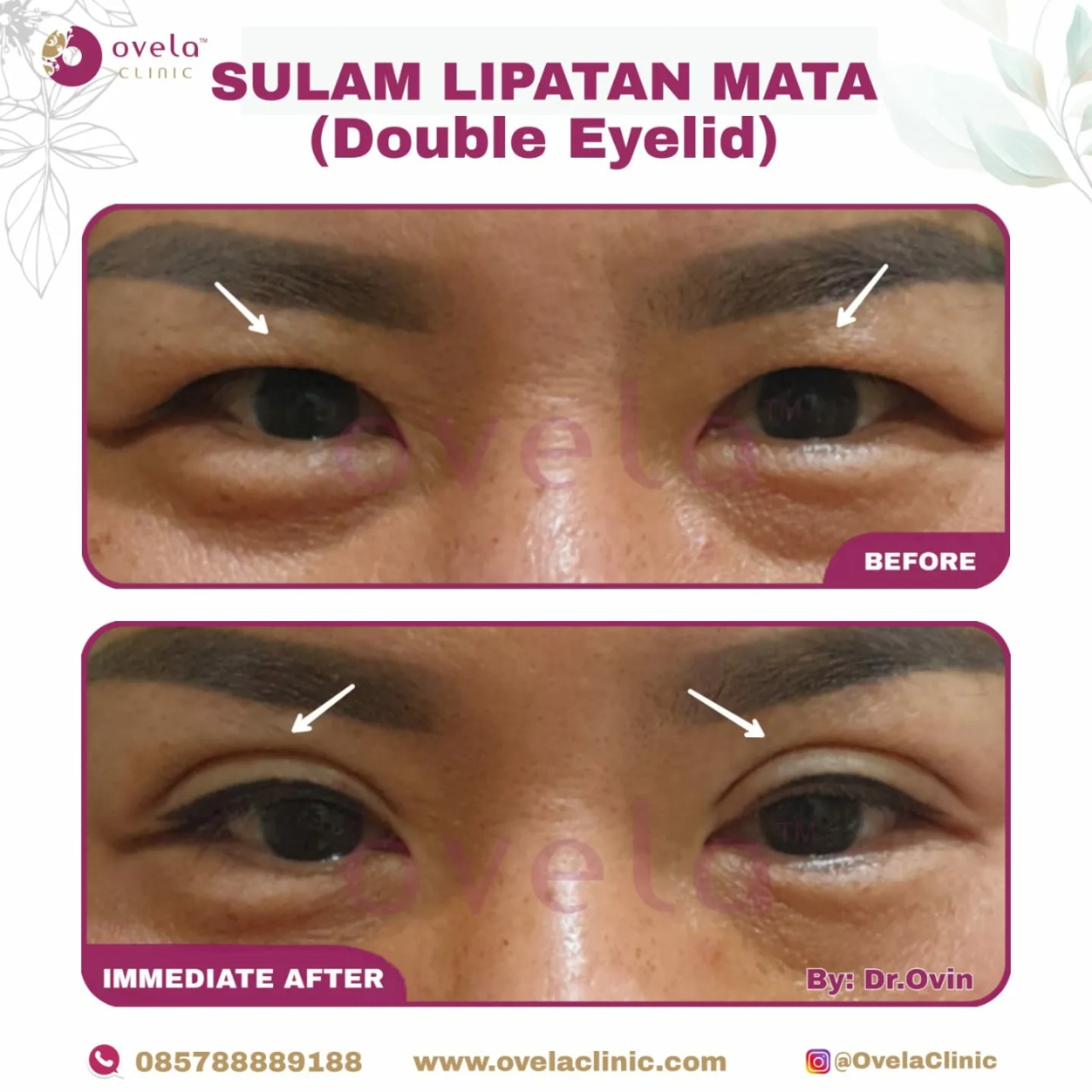
* Results for each individual may vary depending on several other factors. The information above is only a reference.
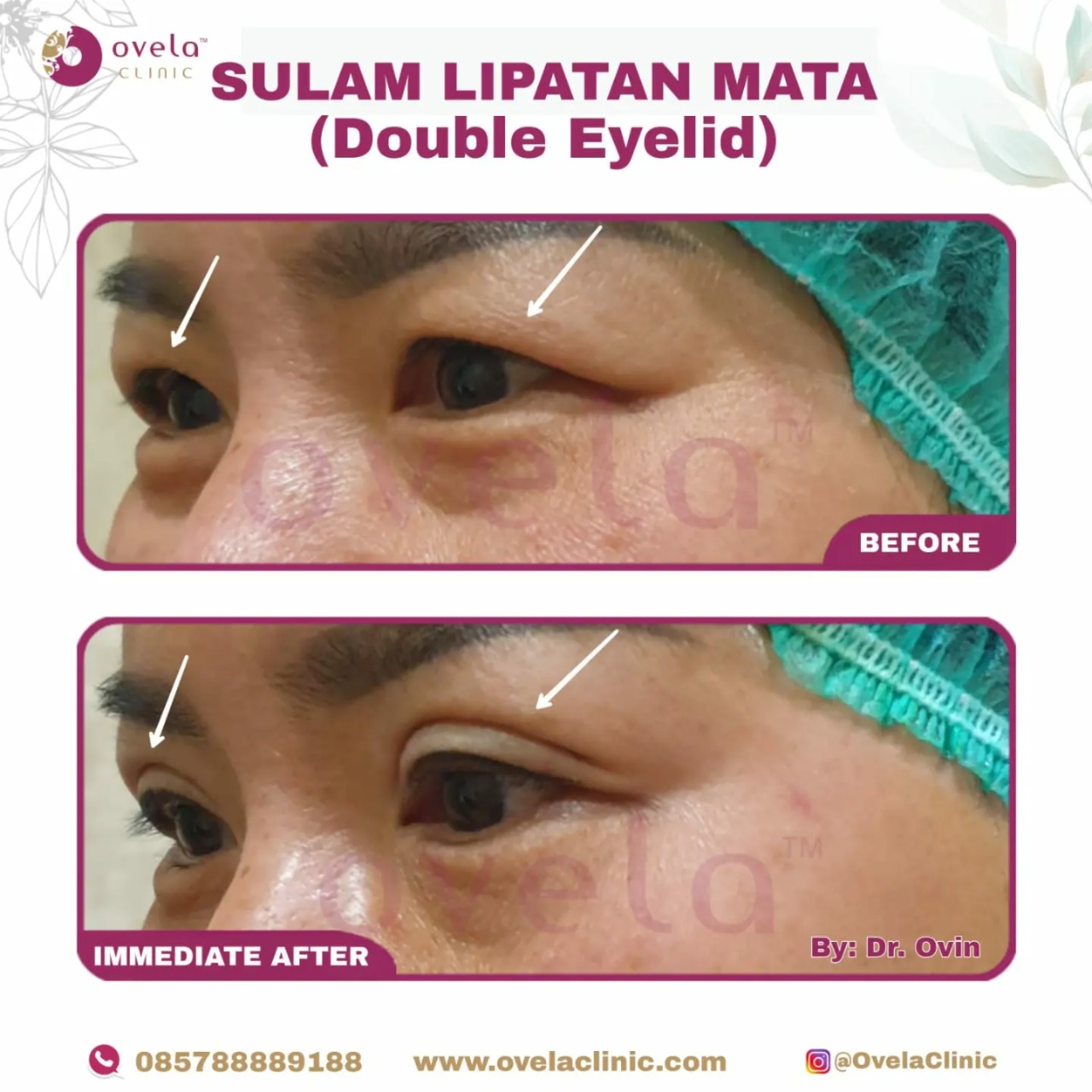
* Results for each individual may vary depending on several other factors. The information above is only a reference.
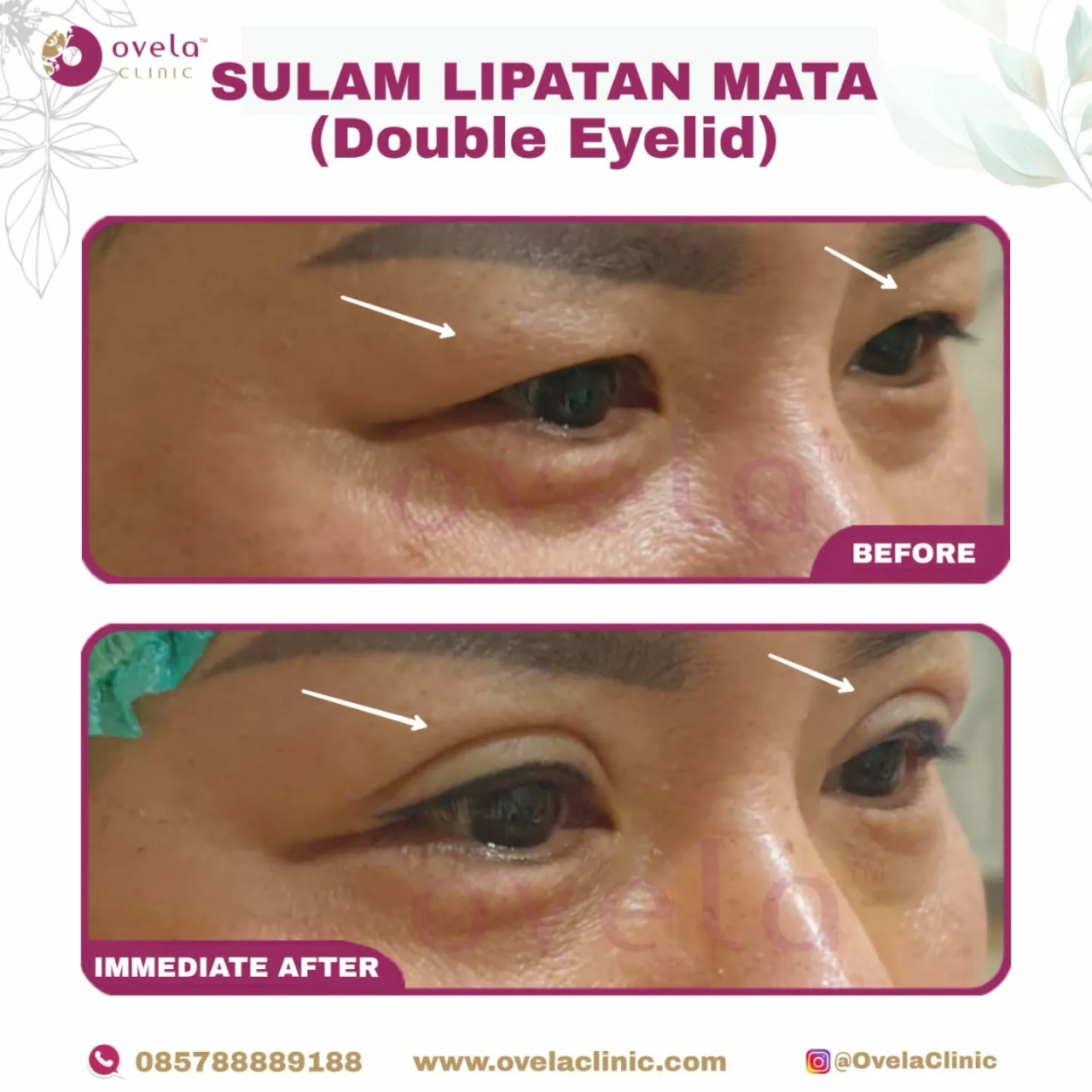
* Results for each individual may vary depending on several other factors. The information above is only a reference.