


- What Is Melasma?
- What Causes Melasma on the Face?
- Melasma vs Dark Spots: What Is the Difference?
- Can Melasma Be Cured Permanently?
- What Are the Most Effective Treatment Options for Melasma?
- Which Is Better for Melasma: Skincare, Tranexamic Acid Injections, or Laser?
- How Long Does Melasma Treatment Take to Show Results?
- Why Does Melasma Return After Treatment?
- How Can You Prevent Melasma from Coming Back?
- When Should You See a Doctor for Melasma?
- Frequently Asked Questions About Melasma Treatment
- Melasma Treatment Consultation at Ovela Clinic Jakarta
Melasma is one of the most common causes of persistent brown patches on the face. It can be frustrating when pigmentation does not improve despite using brightening skincare products—or returns after treatment.
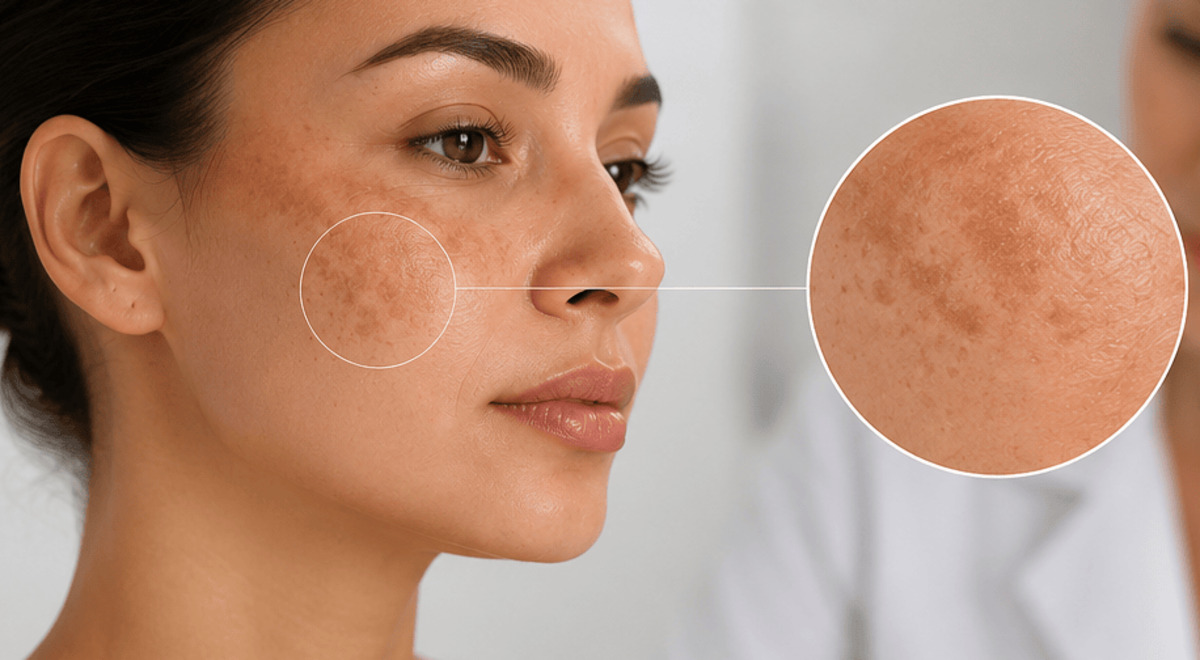
Melasma commonly affects the cheeks, forehead, nose, and upper lip, causing uneven skin tone and visible discoloration. Unlike some other types of dark spots, melasma is a chronic pigmentation condition influenced by sun exposure, hormonal factors, genetics, and changes within the skin.
Effective melasma treatment usually requires more than a single procedure.
Depending on the individual's condition, management may involve medical skincare, consistent sun protection, and selected additional treatments.
At Ovela Clinic Jakarta, doctors may consider options such as Meso Radiance with tranexamic acid and Laser Flek / Dark Spot Removal by Alma, when clinically appropriate.
This guide explains what causes melasma, available treatment options, and how to help prevent pigmentation from returning.
What Is Melasma?
Melasma is a chronic hyperpigmentation condition that causes light brown, dark brown, or gray-brown patches on the skin, most commonly on the face.
It develops when the skin's pigmentation processes become overactive, resulting in increased melanin production and uneven pigment distribution.
Melasma frequently appears on:
- Both cheeks.
- Forehead.
- The nose.
- The upper lip.
- The chin.
The patches often develop symmetrically on both sides of the face, although their distribution can vary.
Melasma is not contagious and is generally not medically dangerous. However, its persistent appearance may affect confidence and quality of life.
Unlike certain sun spots, melasma tends to be recurrent, even after successful treatment.
What Causes Melasma on the Face?
Melasma does not have a single cause. It develops through a combination of genetic, hormonal, environmental, and skin-related factors.
1. Sun Exposure
Ultraviolet radiation is one of the most important triggers of melasma.
Both UVA and UVB exposure can stimulate melanocytes, the cells responsible for producing melanin, making existing pigmentation more noticeable.
Visible light may also contribute to melasma, particularly in individuals with skin types prone to hyperpigmentation.
This is why daily sun protection is essential for both treatment and prevention.
2. Hormonal Changes
Melasma is commonly associated with hormonal influences, particularly in women.
Potential contributing factors include:
- Pregnancy.
- Certain hormonal contraceptives.
- Hormone therapy.
- Hormonal changes in susceptible individuals.
Melasma developing during pregnancy is sometimes called chloasma or the mask of pregnancy.
However, not all melasma is hormone-related, and men can also develop the condition.
3. Genetics
Family history may increase a person's likelihood of developing melasma.
Individuals with relatives who have melasma may have a greater genetic predisposition to this pigmentation disorder.
4. Skin Inflammation and Irritation
Inflammation, repeated irritation, and disruption of the skin barrier may aggravate pigmentation.
Overly aggressive skincare products or inappropriate cosmetic procedures may also increase the risk of post-inflammatory hyperpigmentation.
5. Environmental Factors and Heat
In some individuals, heat exposure and environmental conditions may contribute to worsening pigmentation.
However, the extent of their influence varies between patients.
Melasma vs Dark Spots: What Is the Difference?
Not every dark spot on the face is melasma.
Different pigmentation conditions may look similar but require different treatment approaches.
| Pigmentation Type | Characteristics | Common Causes |
|---|---|---|
| Melasma | Brown or gray-brown patches, often symmetrical | Sun exposure, hormonal factors, genetics, and skin-related processes |
| Sun spots (solar lentigines) | More clearly defined brown spots | Long-term sun exposure |
| Post-inflammatory hyperpigmentation (PIH) | Dark marks following acne or inflammation | Pigment changes after skin inflammation |
| Freckles | Small pigmented spots that may darken with sun exposure | Genetics and sunlight |
This distinction is important because a treatment that works well for sun spots may not be suitable for melasma.
For example, some sun spots respond well to pigmentation lasers, while melasma requires greater caution because irritation and aggressive procedures may worsen discoloration.
A medical assessment helps identify the pigmentation type before choosing treatment.
Can Melasma Be Cured Permanently?
Melasma can improve significantly with appropriate treatment, but it cannot always be permanently eliminated.
It is a chronic condition with a tendency to recur.
Even when melasma patches become much lighter, sun exposure, hormonal changes, and genetic predisposition may contribute to pigmentation returning.
The main goals of melasma treatment are to:
- Reduce visible pigmentation.
- Improve overall skin tone.
- Control triggering factors.
- Minimize the risk of recurrence.
- Maintain improvements through long-term skincare and sun protection.
Realistic expectations are important. Promises of completely removing melasma in a single session should be approached cautiously.
What Are the Most Effective Treatment Options for Melasma?
The most appropriate treatment depends on melasma severity, skin type, previous treatments, medical history, and individual response.
Not everyone needs injections or laser procedures.
Here are treatments approaches to consider.
1. Sunscreen and Sun Protection
Consistent sun protection is one of the most important parts of melasma treatment and recurrence prevention.
Ultraviolet radiation and visible light can worsen pigmentation, making daily protection essential.
A broad-spectrum sunscreen with SPF 30 or higher is generally recommended, while SPF 50+ is often a practical choice for everyday protection.
Tinted sunscreens containing iron oxides may provide additional protection against visible light, which can contribute to melasma in susceptible individuals.
Sun protection should also include wearing hats, avoiding excessive sun exposure, and reapplying sunscreen as appropriate.
2. Medical Skincare for Melasma
Prescription and medical-grade topical treatments are commonly used as part of melasma management.
Depending on the patient's condition, doctors may recommend ingredients such as:
- Hydroquinone, Helps reduce excessive pigment production.
- Azelaic acid, May improve hyperpigmentation.
- Retinoid, May support skin renewal and pigmentation management in suitable patients.
- Tranexamic acid topikal, An ingredient studied for its potential benefits in melasma.
- Kombinasi obat topikal, Including triple-combination formulations in selected cases.
Treatment selection and duration should be medically supervised.
Hydroquinone and certain prescription combinations require appropriate monitoring to minimize irritation and other adverse effects.
Some retinoids should not be used during pregnancy.
3. Tranexamic Acid Mesotherapy – Meso Radiance
Another treatment approach that may be considered for selected patients is intradermal mesotherapy using tranexamic acid (TXA)..
Tranexamic acid has been studied for its potential to help reduce pigmentation associated with melasma.
In mesotherapy, the active ingredient is delivered through small injections into the skin.
At Ovela Clinic, this treatment is known as Meso Radiance.
Meso Radiance is designed for selected pigmentation concerns, particularly melasma, when a doctor determines that intradermal treatment may be appropriate.
Potential benefits include:
- Helping reduce the appearance of melasma patches.
- Supporting a more even-looking skin tone.
- Improving pigmentation gradually.
- Providing an additional option within a personalized melasma treatment program.
Clinical research suggests that intradermal tranexamic acid may help reduce melasma severity in some patients.
However, injectable tranexamic acid is not automatically more effective than every topical treatment and does not guarantee permanent results.
At Ovela Clinic, doctors may consider an initial program of approximately 6–8 sessions at intervals of 2–4 weeks, depending on the patient's condition and response. This is an individualized treatment plan rather than a universal standard.
Learn more about Meso Radiance, its benefits, procedure, and recommended treatment sessions..
4. Laser Treatment for Melasma and Dark Spots
Laser technology can be used to treat certain pigmentation concerns.
However, effectiveness and safety depend on the pigmentation type, laser technology, treatment settings, and individual skin characteristics.
For selected sun spots, pigmentation lasers may be an appropriate option.
Pada melasma, penggunaan laser perlu lebih selektif karena prosedur yang terlalu agresif dapat menyebabkan peradangan, hiperpigmentasi pascainflamasi, atau kekambuhan.
At Ovela Clinic, doctors may consider options including:
Dark Spot Removal by Alma Dark Spot Removal by Alma service page) for suitable pigmentation concerns.
Laser Rejuvenation for selected skin conditions based on medical assessment.
Laser treatment is not necessarily the first-line choice for every patient with melasma.
5. Combining Tranexamic Acid Mesotherapy with Laser Treatment
For selected patients, doctors may consider combining different approaches to pigmentation management.
Common examples : Meso Radiance with tranexamic acid may be considered alongside an appropriate laser procedure when the patient's pigmentation characteristics and skin condition allow.
Combination treatment aims to address pigmentation through different mechanisms.
However, more procedures do not always produce better results.
In melasma-prone skin, doctors must carefully consider irritation risk, laser settings, treatment intervals, and skin recovery.
Combination treatment should therefore be individualized rather than routinely recommended for every patient.
Which Is Better for Melasma: Skincare, Tranexamic Acid Injections, or Laser?
There is no single treatment that works best for every patient.
| Treatment | Main Role | Important Considerations |
|---|---|---|
| Sunscreen | Protection against pigmentation triggers | Essential for most patients |
| Skincare medis | Gradual pigmentation control | Often a first-line treatment |
| Meso Radiance / suntik TXA | Additional option for selected melasma cases | Requires medical evaluation and multiple sessions |
| Pigmentation laser | Treatment for selected pigmentation concerns | Careful patient selection is particularly important in melasma |
| Combination treatment | Uses multiple complementary approaches | Depends on individual response and risk factors |
For mild melasma, doctors may begin with sun protection and topical medication.
For more persistent cases, additional options such as tranexamic acid-based treatment or selected procedures may be considered.
Successful melasma management depends on accurate diagnosis, consistent skincare, and effective control of triggering factors.
How Long Does Melasma Treatment Take to Show Results?
Melasma improvement usually occurs gradually.
Some patients may notice changes after several weeks of appropriate treatment, but meaningful assessment often requires a longer period.
For many topical regimens, treatment response is commonly evaluated over approximately 8–12 weeks, depending on the medication and individual condition.
Procedures such as mesotherapy may require several sessions before changes can be assessed.
The speed of improvement depends on:
- Melasma severity.
- How long the pigmentation has been present.
- Hormonal and genetic factors.
- Type of treatment.
- Consistency of sun protection.
- Individual skin response.
Long-standing or frequently recurring melasma may require ongoing management.
Why Does Melasma Return After Treatment?
Melasma can return even after successful improvement.
This happens because treatment may reduce visible pigmentation without eliminating all the underlying factors responsible for the condition.
Common reasons for recurrence include:
1. Inadequate Sun Protection
Ultraviolet radiation and visible light can reactivate pigmentation processes.
2. Ongoing Hormonal Influences
Hormonal changes or certain medications may contribute to recurrence in susceptible individuals.
3. Stopping Maintenance Skincare
Some patients benefit from continued maintenance treatment to help control pigmentation.
4. Irritating Skincare Products
Repeated skin irritation may aggravate pigmentation, particularly in individuals prone to post-inflammatory hyperpigmentation.
5. Inappropriate or Overly Aggressive Procedures
Certain procedures may trigger inflammation and make pigmentation more noticeable.
This is why melasma management should focus on long-term control rather than short-term cosmetic improvement alone.
How Can You Prevent Melasma from Coming Back?
Although recurrence cannot always be completely prevented, several strategies can help reduce the risk.
1. Use Sunscreen Every Day
Choose an appropriate broad-spectrum sunscreen.
For melasma-prone skin, tinted sunscreen containing iron oxides may offer additional visible-light protection.
2. Minimize Excessive Sun Exposure
Wear a hat and use additional physical protection when spending time outdoors.
3. Follow a Doctor-Recommended Skincare Routine
Maintenance skincare may help keep pigmentation under control.
Avoid overusing strong active ingredients without medical guidance.
4. Protect Your Skin Barrier
Repeated irritation can worsen pigmentation.
Use gentle cleansers and moisturizers appropriate for your skin condition.
5. Review Hormonal Factors When Relevant
If melasma is associated with hormonal changes or certain medications, discuss these factors with your healthcare provider.
Do not stop prescribed hormonal medication without medical advice.
6. Attend Follow-Up Appointments When Needed
Your doctor can monitor changes in pigmentation and determine whether skincare or treatment adjustments are necessary.
When Should You See a Doctor for Melasma?
Consider consulting a doctor if:
- Dark patches are becoming larger or darker.
- Pigmentation does not improve with your current skincare routine.
- Melasma repeatedly returns.
- Brightening products cause irritation.
- You are considering tranexamic acid mesotherapy or laser treatment.
- You are unsure whether your dark spots are melasma or another skin condition.
Pigmented lesions that change rapidly, bleed, or have unusual features should be examined to rule out other skin conditions.
Frequently Asked Questions About Melasma Treatment
1. What is the most effective treatment for melasma?
Melasma treatment typically involves sun protection, medical skincare, and additional therapies when appropriate. No single treatment is universally most effective for every patient.
2. Can melasma disappear completely?
Melasma may improve significantly, but it does not always disappear permanently and can recur.
3. What causes melasma?
Melasma develops through a combination of sun exposure, hormonal influences, genetic predisposition, and skin-related biological processes.
4. Can tranexamic acid treat melasma?
Tranexamic acid may help reduce melasma severity in some patients, but it does not guarantee complete clearance.
5. Are tranexamic acid injections better than creams for melasma?
Not necessarily. Intradermal tranexamic acid is an additional treatment option, while topical therapies and sun protection remain important parts of melasma management.
6. Is laser treatment safe for melasma?
Laser treatment may be appropriate for selected patients, but it requires careful assessment because irritation, worsening pigmentation, and recurrence are possible.
7. How many melasma injection sessions are needed?
The number of sessions varies. At Ovela Clinic, doctors may consider an initial Meso Radiance program of approximately 6–8 sessions, depending on the patient's condition.
8. Can melasma return after laser treatment?
Yes. Melasma may recur even when pigmentation has improved after laser treatment.
9. Is melasma the same as ordinary dark spots?
Melasma is one type of hyperpigmentation. Not every dark spot is melasma.
10. Can sunscreen help prevent melasma recurrence?
Yes. Consistent sunscreen use is one of the most important strategies for managing melasma and reducing recurrence risk.
11. Does melasma only affect women?
No. Melasma is more common in women, but men can also develop it.
12. Can melasma become worse after treatment?
Yes. Skin irritation or inappropriate procedures may worsen pigmentation in some patients. This is why treatment selection should be individualized.
Melasma Treatment Consultation at Ovela Clinic Jakarta
Managing melasma requires an individualized approach based on the type of pigmentation, skin condition, and triggering factors.
At Ovela Clinic, doctors can assess facial pigmentation and help determine whether medical skincare, tranexamic acid mesotherapy, selected laser treatments, or a combination approach may be appropriate.
Explore our pigmentation treatment options:
Meso Radiance – Tranexamic Acid Mesotherapy for Melasma
Dark Spot Removal by Alma – Laser Pigmentation Treatment
- Ovela Clinic Tebet – South Jakarta
Royal Palace Blok B-34
Jl. Prof. Dr. Soepomo SH No. 178A
Tebet, South Jakarta
WhatsApp: +62 857-8888-9188
- Ovela Clinic Kebon Jeruk – West Jakarta
Jl. Panjang Arteri Kelapa Dua Raya No. 61 Blok J
Kebon Jeruk – West Jakarta 11550
WhatsApp: +62 822-4040-8086
Book a consultation with Ovela Clinic to discuss the most appropriate approach for your melasma or dark spots.
Medical Reviewer: dr. Ovin Endah Lestari
Aesthetic Physician & Founder of Ovela Clinic
Last Medically Reviewed: 14 Oct 2026
This article is for educational purposes and does not replace an individual medical consultation. Diagnosis, treatment suitability, results, and potential risks vary between patients.